It was last semester (Fall 2020) that I remember the temporary natural high and feelings of warmth after purchasing Arab products from special middle eastern markets and taking a bite from a piece of bread with labneh spread and dipped in olive oil. I had not eaten the products that I used to have at my family’s home for almost 3 months. My body was aching for something familiar and comfortable. Around the same time, I discovered by scrolling through Instagram that there is a solo exhibition on display of Michael Rakowitz’s show Nimrud, just two hours from Ithaca. My excitement was taken away when I found out that the museum where the
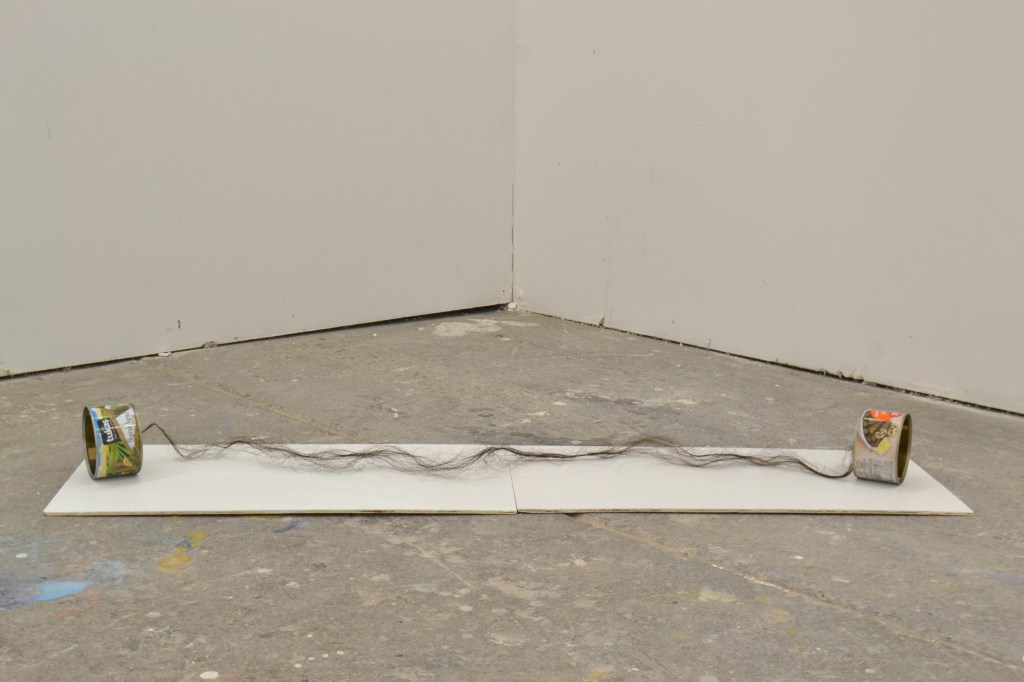
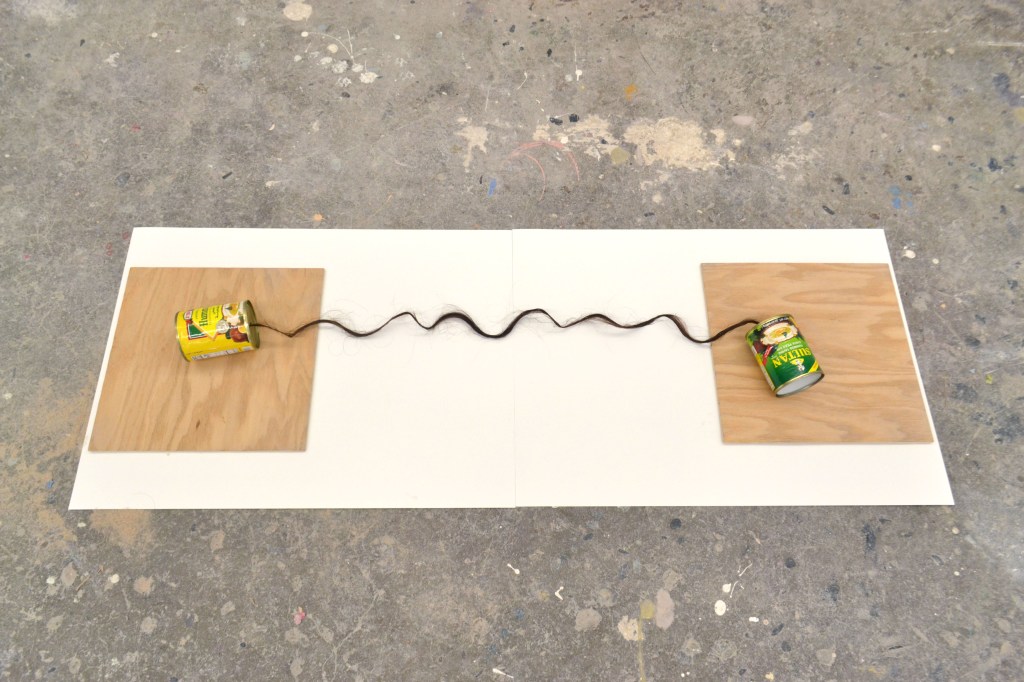
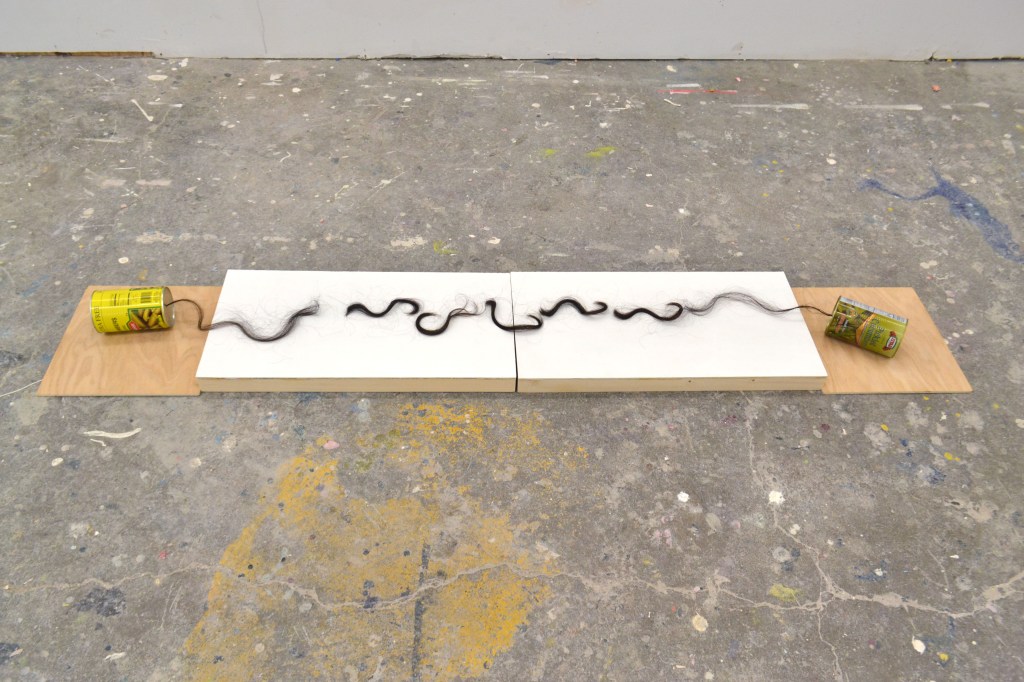
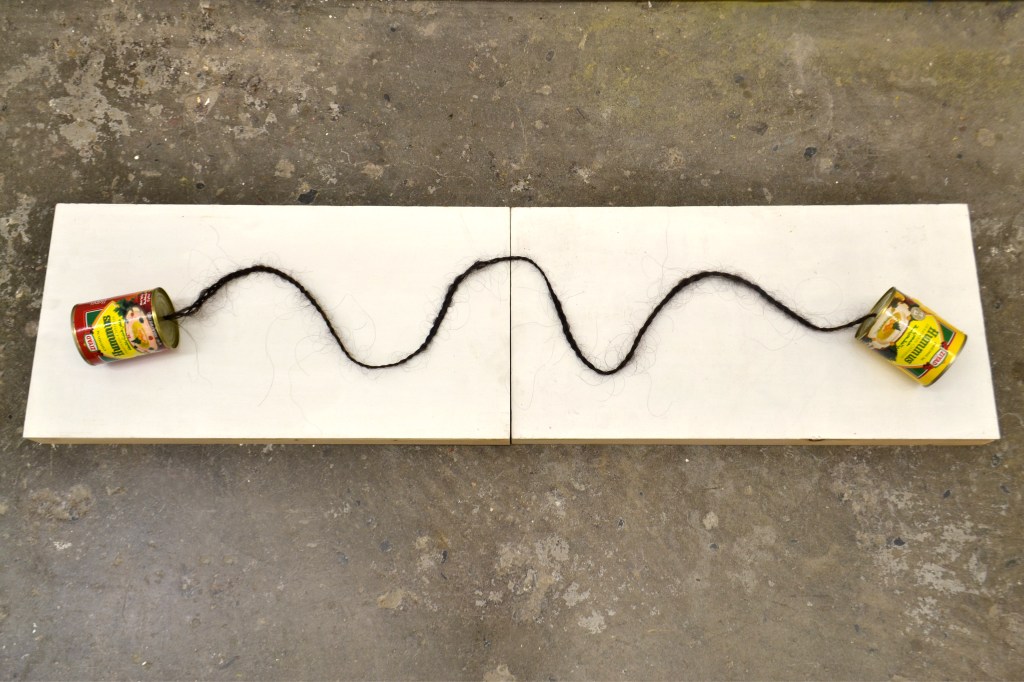
exhibition took place, the Wellin, is closed to the public and only open to those affiliated to Hamilton College due to the pandemic. Having already been familiar with his work, it would be appropriate to say that the works and specifically the materials of utilizing Arab food labels that are incorporated in Rakowitz’s works, are of influence to the two tin can sculptural pieces I made in response to familiar foods from home and its consumption. When I observe these pieces, I think about the mouth as the main focus in how these pieces would function: to eat and to communicate. Food was always an important cultural staple to my family. Memories of eating stuffed grape leaves was a distinct part of eating meals together as a family. As a child, I was a picky eater and never ate them because I was disgusted by the thought of eating leaves; eventually, I grew to love them as I matured. Communication, and to also narrow down communication and physical barriers of presence, is another significant part of my past and even the present. By choosing the tin can phone method as an old device of communication, I equate these pieces with landline telephones. The landline was the only connecting tool of contact for my folks to communicate back and forth to relatives living long distance as I never got to grow up around extended family members. They also would speak in their native tongues as I watched them speak and listened to their conversations. I was unable to translate, but was lucky if I caught a word or two. Regardless of the language barriers or distance, this particular form of connection still remains with me in how I understand the concept of distance in the world that was my home. With what seems to be the generational baton passed on to me, here I am in a similar position that I rely on my smartphone to communicate with family and friends from afar. It is incredible how far technology has advanced in contacting someone so easily thanks to calling and video apps with long distance phone calls now staying in the far past. Ultimately, phones literally were and are lifelines of survival that aim to keep contact with close loved ones.
